Bonn–MPA Binary Interface
Explore a dense grid of massive binary star evolution models
across metallicities — interactively.
The Bonn stellar group, led by Prof. Dr. Norbert Langer, has computed several large grids of binary stellar evolution models at various metallicities over the past decade using the MESA stellar evolution code. These models cover a wide range of initial binary parameter space (initial primary masses, mass ratios, and orbital periods), capturing the full diversity of binary interaction channels — from stable mass transfer to unstable mass transfer.
The models are stored for long-term preservation at the Max Planck Institute for Astrophysics (MPA) and are publicly accessible via MPA Stellar Model Grid Repository. The Bonn–MPA Binary Interface (BOMBI) is designed as a first point of access for astronomers from various fields to explore, visualize, and exploit these grids for their own research — maximizing the scientific impact of this substantial computational investment.
Key applications include predicting populations of gravitational-wave progenitors, black hole binaries, supernova progenitors, and cluster properties across different metallicity environments.
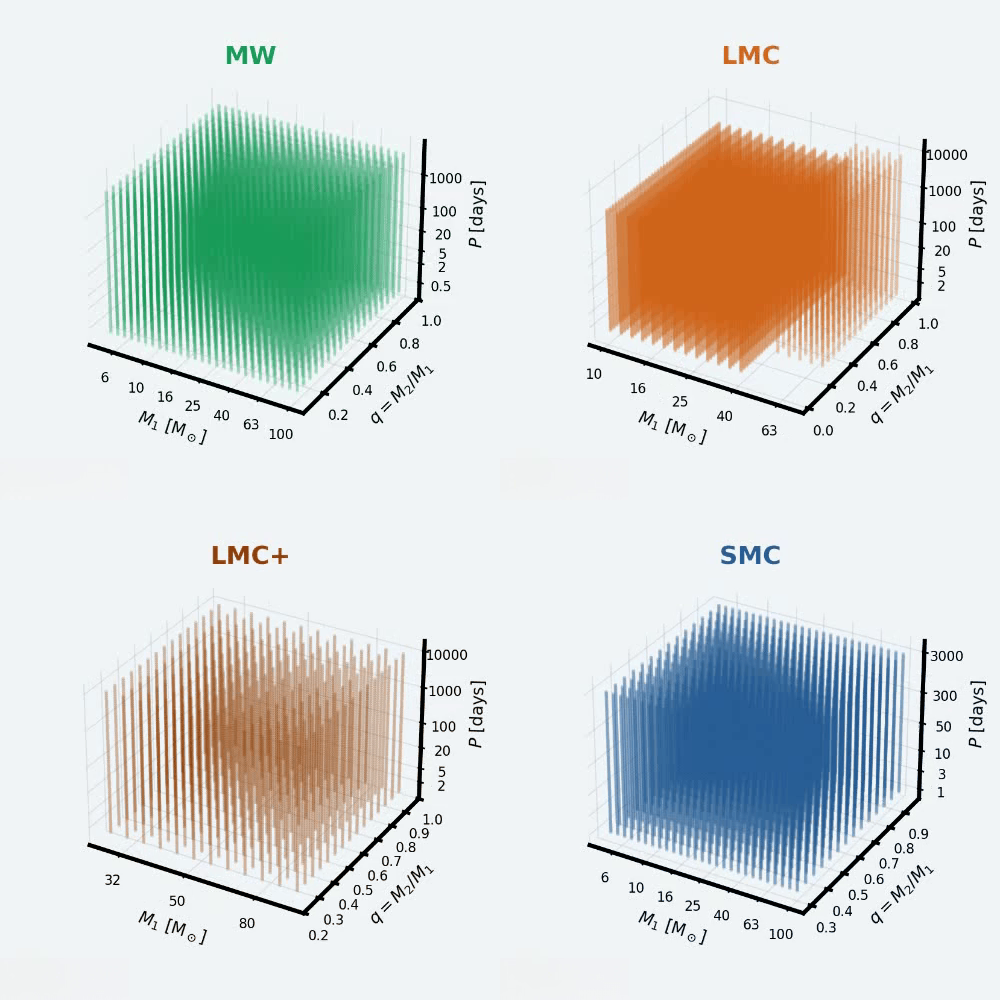
Each grid covers a dense and wide parameter space in initial primary mass, mass ratio, and orbital period. Some input physics might be different between the grid. Please consult the references for details.
The whole model grids are available via MPA Stellar Model Grid Repository
Each app is a live interactive
Bokeh server application.
If you use BOMBI for your work, please cite it as "Jin et al. (in prep.)" and provide a footnote containing the URL to this web-service:
"The BOMBI web-service is available at https://bonnmpainterface.com/"
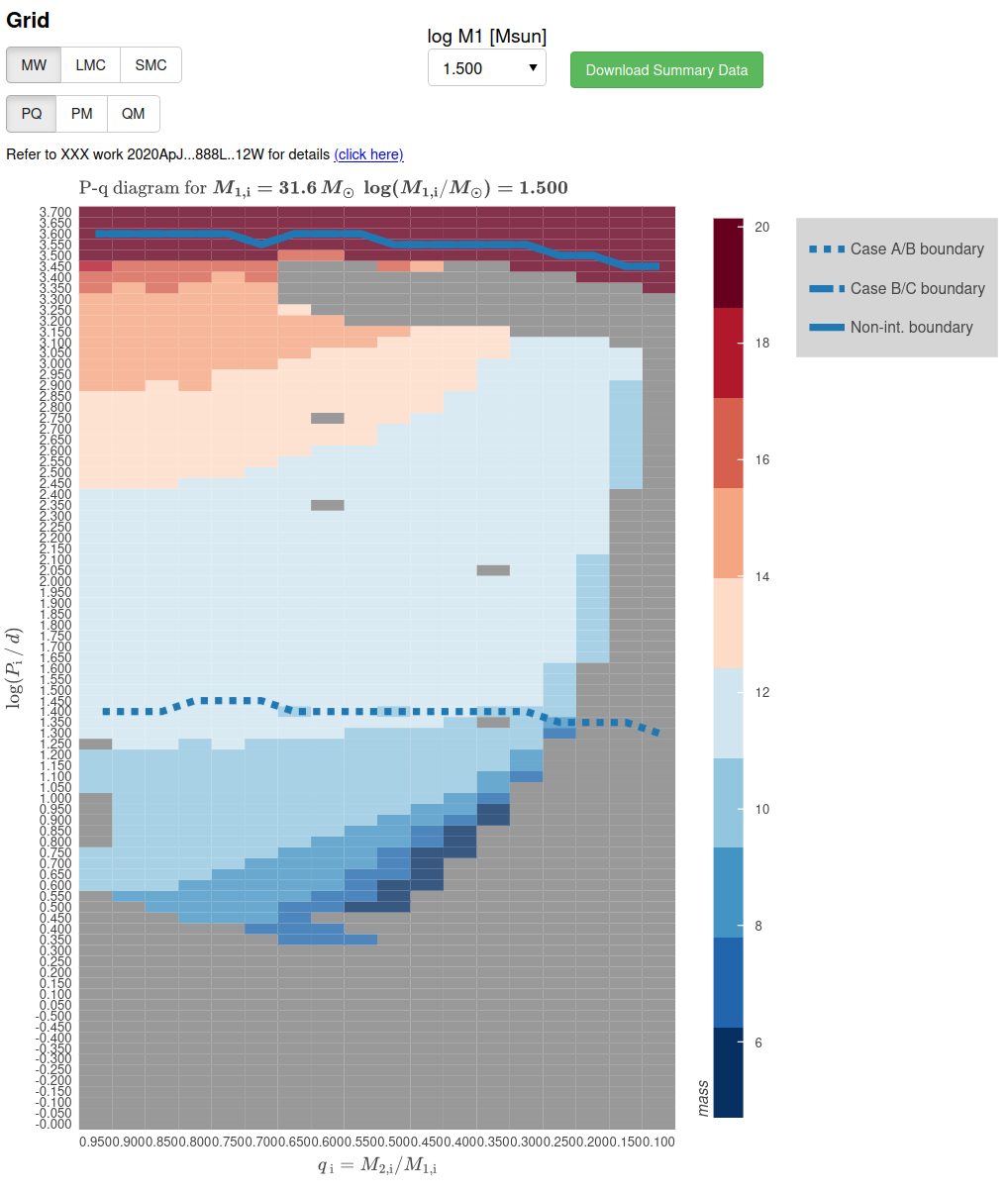
Overview of the initial binary parameter space, color-coded by evolutionary outcome or any stellar/orbital property.
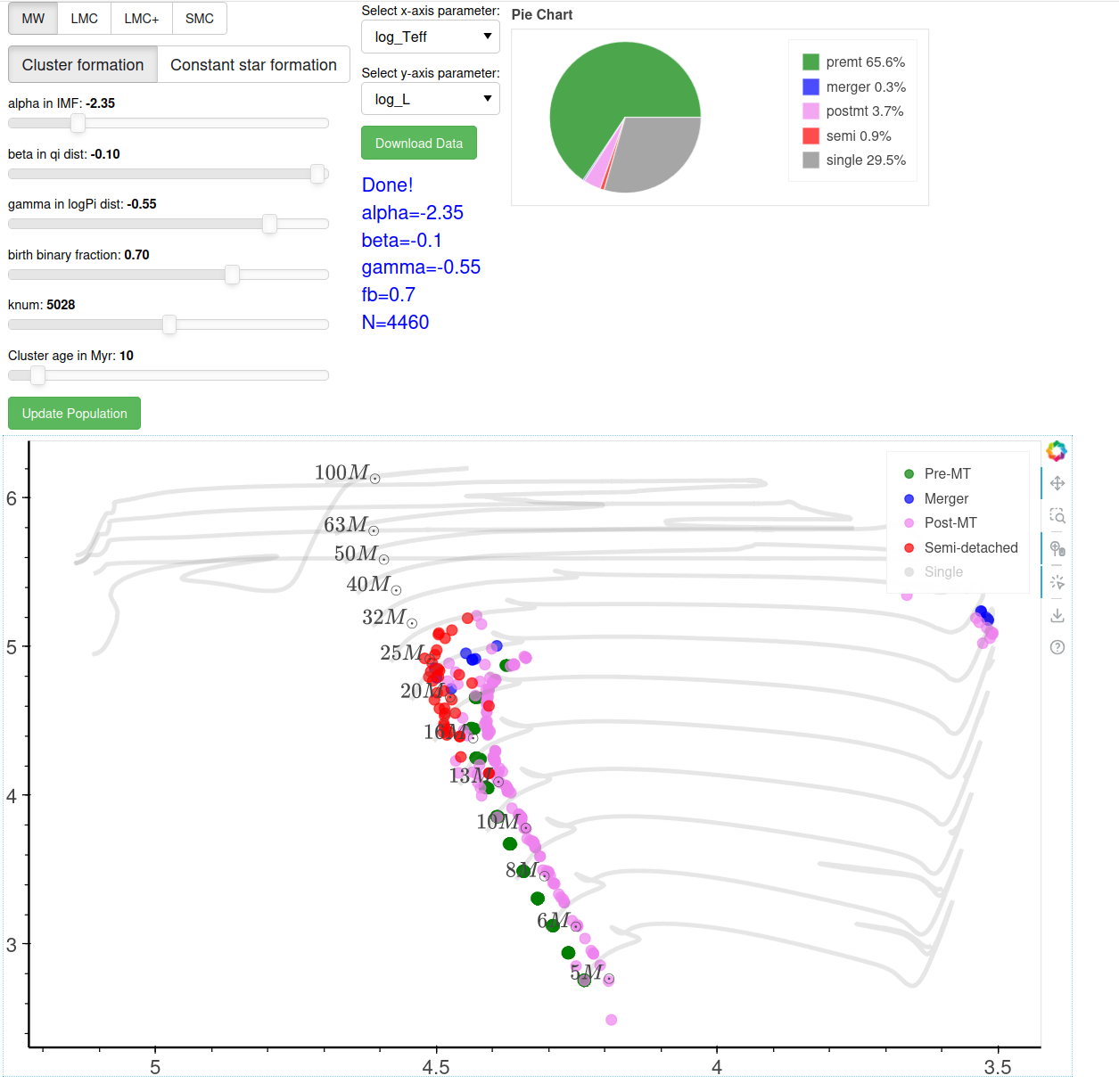
Generate synthetic stellar population on-the-fly from each model grid using user-defined initial distributions.
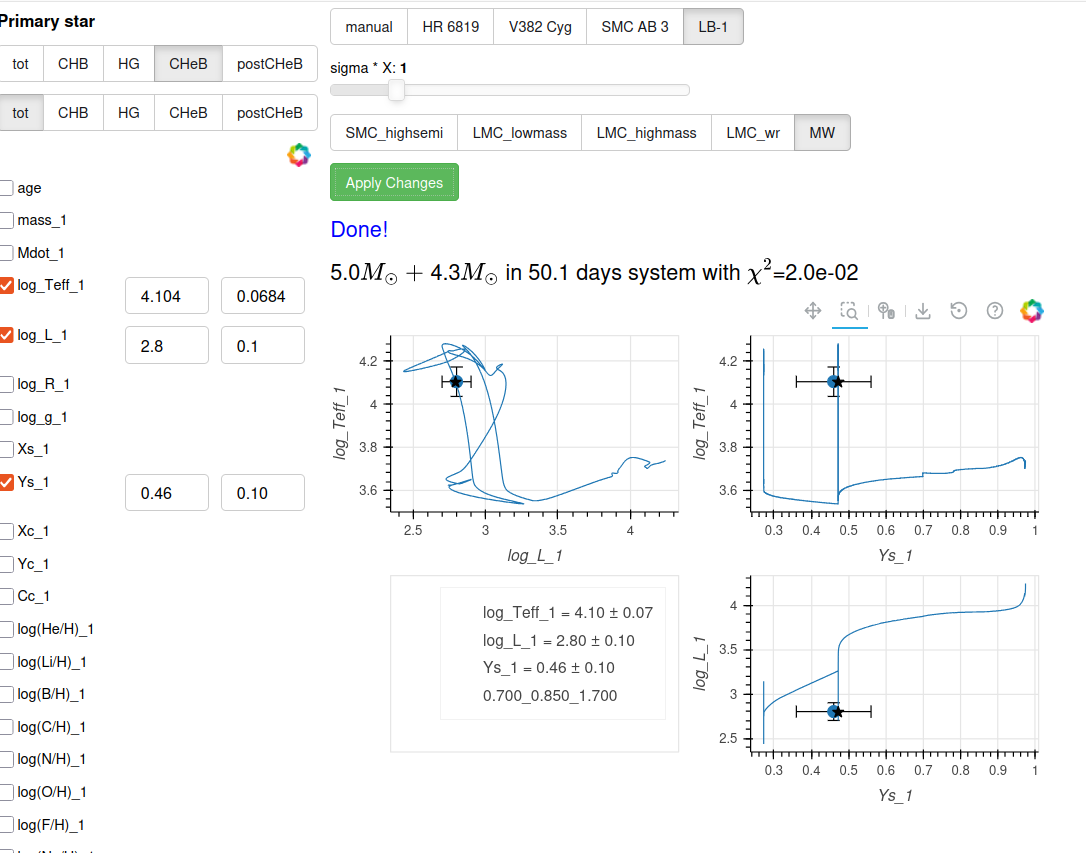
Scan through the model grid and locate the best-fitting model to observed constraints via χ² minimization.
A list of publications using BOMBI model grids extensively.
Full list maintained in the NASA ADS public library ↗.







MESA input and output (history, profile) for the whole grids, hosted at the MPA.
Go to repository ↗If you use these models in your research, please cite the relevant papers.
See publications
For questions about the web interface or the data, please contact
Harim Jin.
For science questions, please consult the
relevant publications first.